
Our Story.
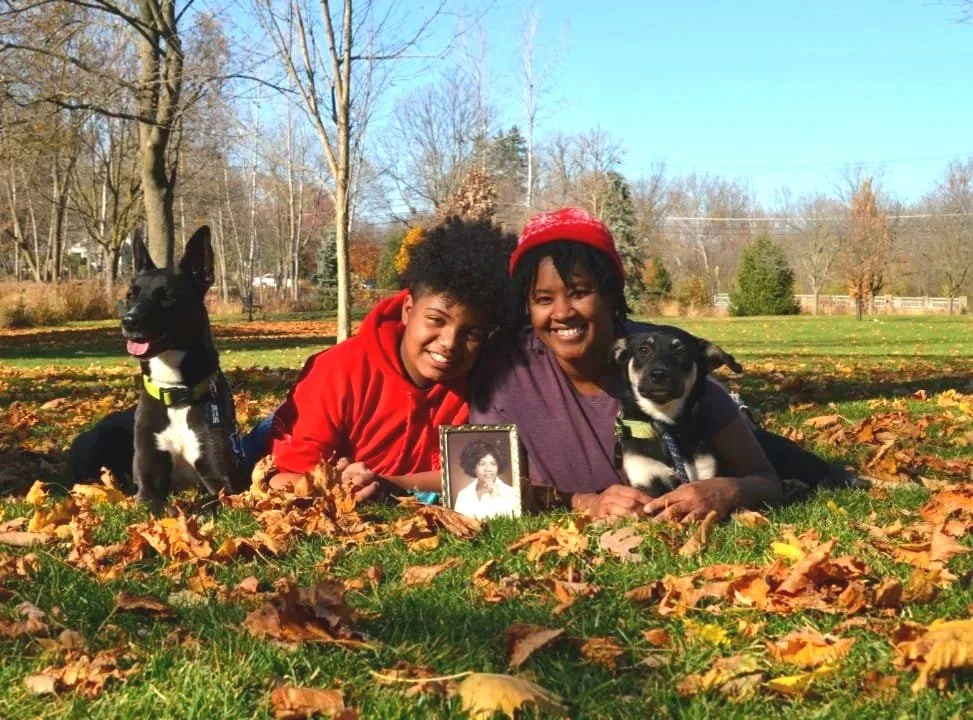
When we talk about the Nature Gap, it is something very close to me because I am one of those 74% who grew up in a nature-deprived area. However, I was fortunate enough to have a mom and granny who knew the value of being in nature. Every summer, they packed up our bikes and made the 30 min drive to Kensington Metropark so we could ride the trails. We also took road trips to many different national parks. Some of the best days of my life were spent scrambling on rocks in the Badlands, hiking through the Smokey Mountains and riding my bike at Kensington. But I didn't realize just how amazing that experience was until I became a foster mom.
Back in 2014, my entire world began to crumble. My grandmother was diagnosed with Lewy Body Dementia and I became her primary caretaker. It was easily the hardest, saddest, and scariest thing I've ever had to do. Eventually she deteriorated to the point where I could no longer safely care for her at home and we were forced to put her into a facility. My brothers had moved to different parts of the country, my cousin was away serving in the military, and I didn't know it yet, but my mom had less than 2 years to live.
It was around this time that my friend, a foster mom, showed me a photo of a little boy who needed a family. He looked just like me. I could see my granny, my mom, and my brothers in his face. I called the agency the next day. It took a year before I could meet him, six more months before he moved in, and another two years before the adoption was finalized. My mom was able to meet him, but she walked on within two months of him moving in and wasn't able to see him officially become my son. I had no idea when I made that first phone call to the foster care agency, but we both needed a family.
During a particularly rough period, I packed our bikes, a tent, a bag of dog food and a cooler and we started driving. I didn't actually have a plan. But we camped, we swam in lakes and oceans, we rode our bikes through woods and deserts and plains. We discovered constellations and encountered bears, coyotes and prairie dogs. We ate a lot of ice cream. We said we wouldn't stop until we got to the ocean. A week later, we swam in the Pacific. For nearly a month, we lived without screens and without rules. And it was amazing.
A year later, we took in another foster kid and that's where I really saw the importance of being in nature. This new young man, full of anger and grief and confusion, came alive during our hikes. Although not at first. Just like for my son, the first few trips for him were scary, and uncomfortable. Just like my son, the outdoors was a foreign place. He didn't get it. But he soon did. Soon, he was begging to go on a hike almost every day, in winter. Several times a week, we'd go out in the snow with backpacks and the dogs and explore. I'd let them take turns leading the way. We'd try to identify animal tracks, and plants. Instead of trying to act like a "tough guy" he started acting like a kid. The therapeutic benefits on this child were obvious, and his therapist noticed.
By the end of 2020, I was convinced of the power of the outdoors and I no longer felt I could sit and work on a computer all day. I walked away from my career as a semi-successful UX designer and began working in a bike shop. In August 2022, I received a scholarship to United Bicycle Institute and became a certified bike mechanic. It's not as prestigious. We almost starve in winter. But I'm happier. I'm healthier.
The outdoors, and biking in particular, got me through some of the most difficult times, and provided some of the best times in my life. Bikes brought me closer to my son. Hiking provided healing and excitement to a kid who the entire world turned its back on. Yet, the outdoors is something that is not accessible to so many of the people who need it most.
For years, I had been randomly fixing kids' bikes for free. But in Fall 2023, I realized, I could do more. I could teach kids how to fix their own bikes. I could take them to parks, and introduce them to all that nature had to offer. I could give them, what my mom and granny had given me.
Our Mission
Give kids the tools and skills to fix bikes and be safe, skilled cyclists, coordinate events to enable them to ride bikes on trails that are not typically accessible to them, and encourage stewardship, appreciation, and decolonization of the outdoors.
Meet the Team
-
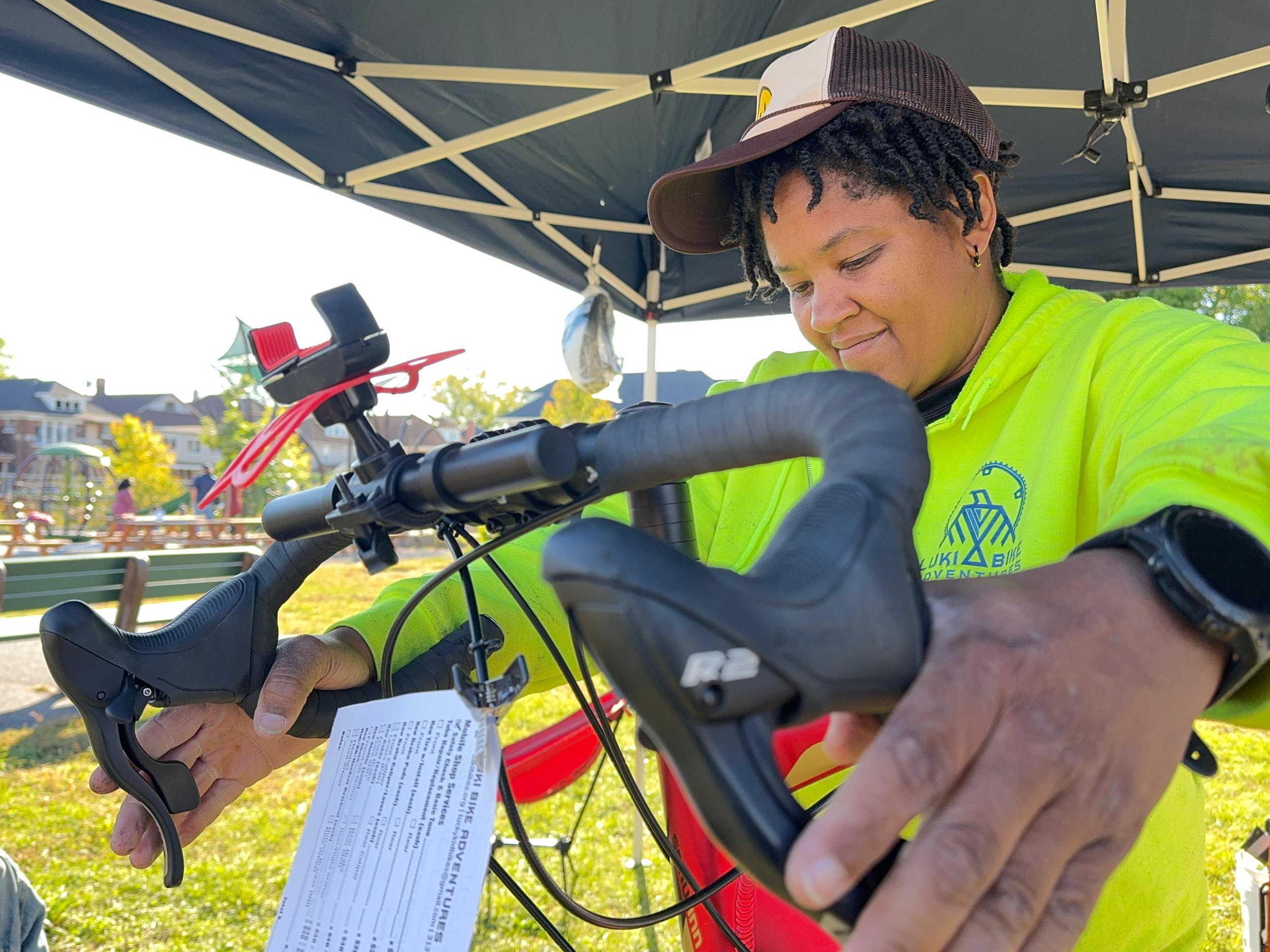
Kris
Dungeon Master
-
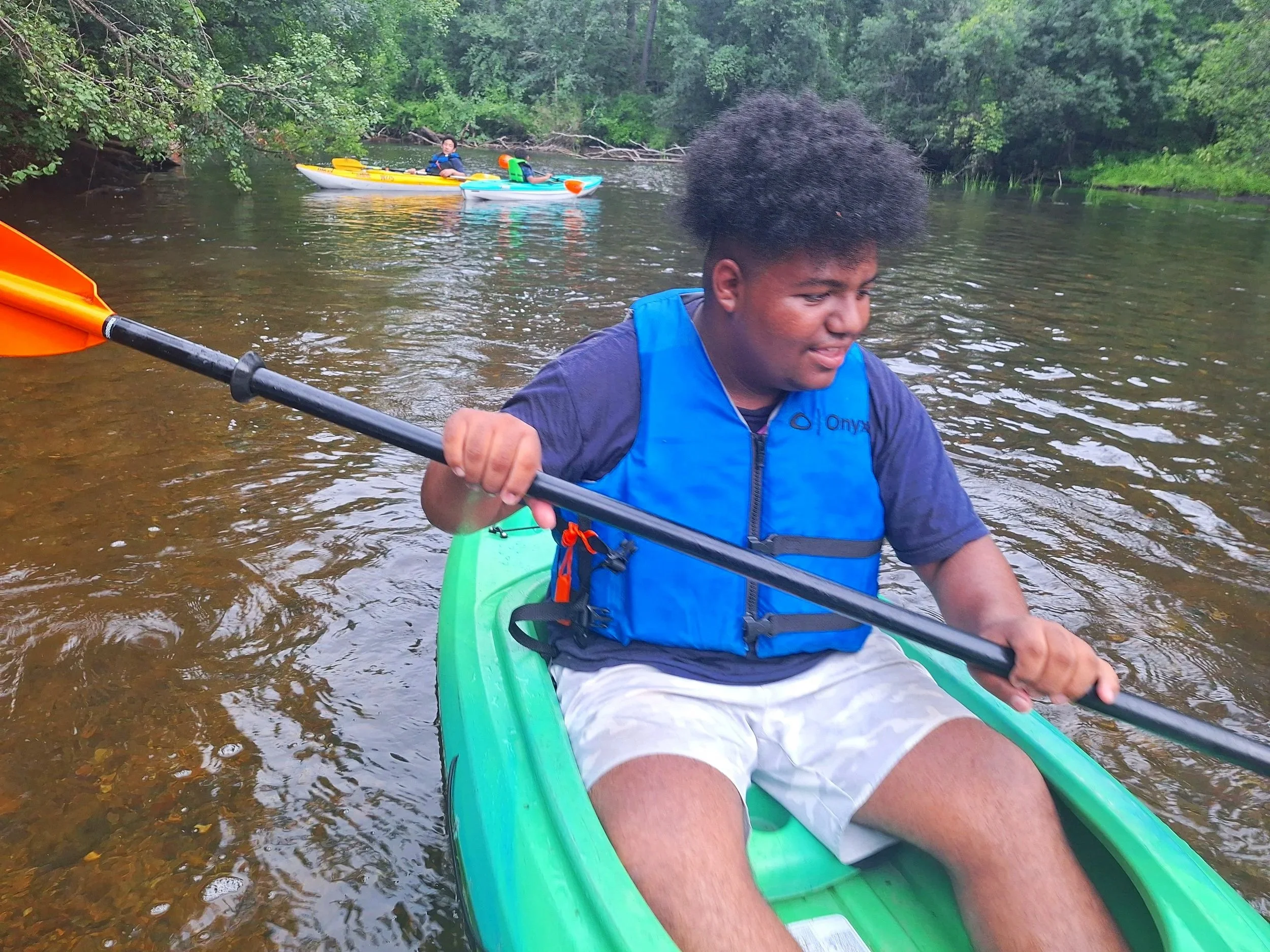
Nate
Padawan
-
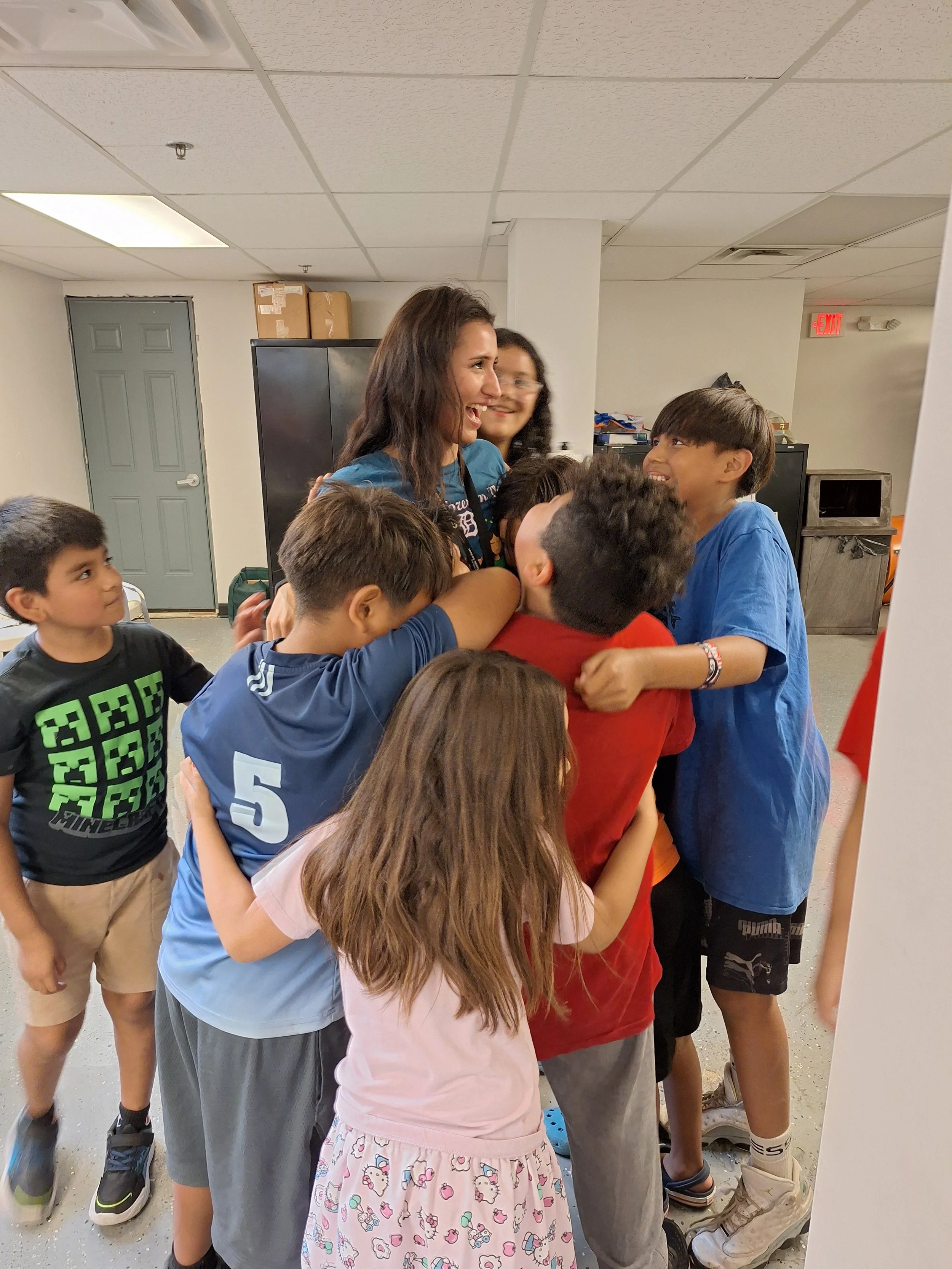
Azhanae
Kid Wrangler
-
Stacey
Master Shredder
-
Marie
Hype-Woman
Our Logo
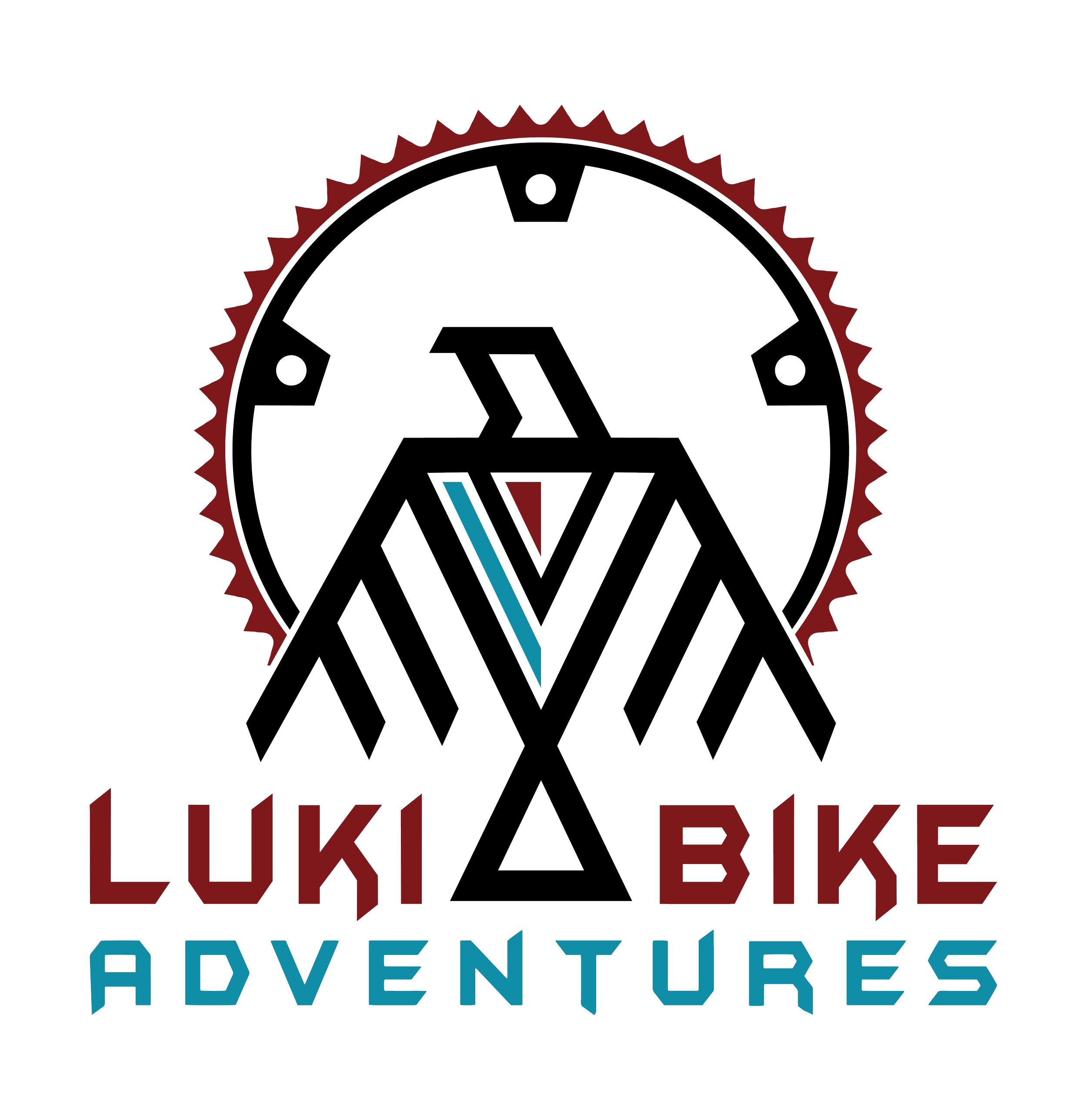
When the time came to design a logo, I immediately recognized the significance of involving an indigenous artist. Despite my indigenous heritage and experience as a graphic designer, I wanted someone with deeper connections to the indigenous community than myself. While relinquishing creative direction isn't always easy, in this case, it was absolutely the right and even necessary choice.
Authentic representation amplifies diverse voices and creates opportunities to highlight people, stories and perspectives that deserve to be celebrated and acknowledged.
This logo stands as a testament to our unwavering commitment to the communities we serve. The Thunderbird and Eagle, integral symbols for many indigenous tribes, hold sacred significance and are prominently featured on the Anishinaabe flag. Additionally, the Eagle holds cultural importance beyond indigenous communities, appearing on the Mexican flag, the Nigerian Coat of Arms, and serving as a symbol of American freedom. This intentional incorporation reflects not only our dedication to honoring diverse cultures but also our aspiration to connect and resonate with a broad and inclusive audience.
Chi migwetch to Johnnie Jae, artist, activist, indigenerd and founder A Tribe Called Geek for all of her hard work. Check out her other work at www.johnniejae.com.
Code of Ethics
Luki Bike Adventures seeks to introduce foster kids and children of color to the joy and healing power of the outdoors through mountain biking. With this goal in mind, the following standards and values have been adopted to guide the board members, officers, employees, and volunteers in their conduct of all organization business and as much as possible, shall be the basis for board and staff decision-making at all levels.